
A municipality is home to an aging wastewater lift station. The pumps have reached the limit of their lifespan, the controls are outdated, and the access hatch has degraded. Although the concrete wetwell is solid structurally, it requires to be upgraded.
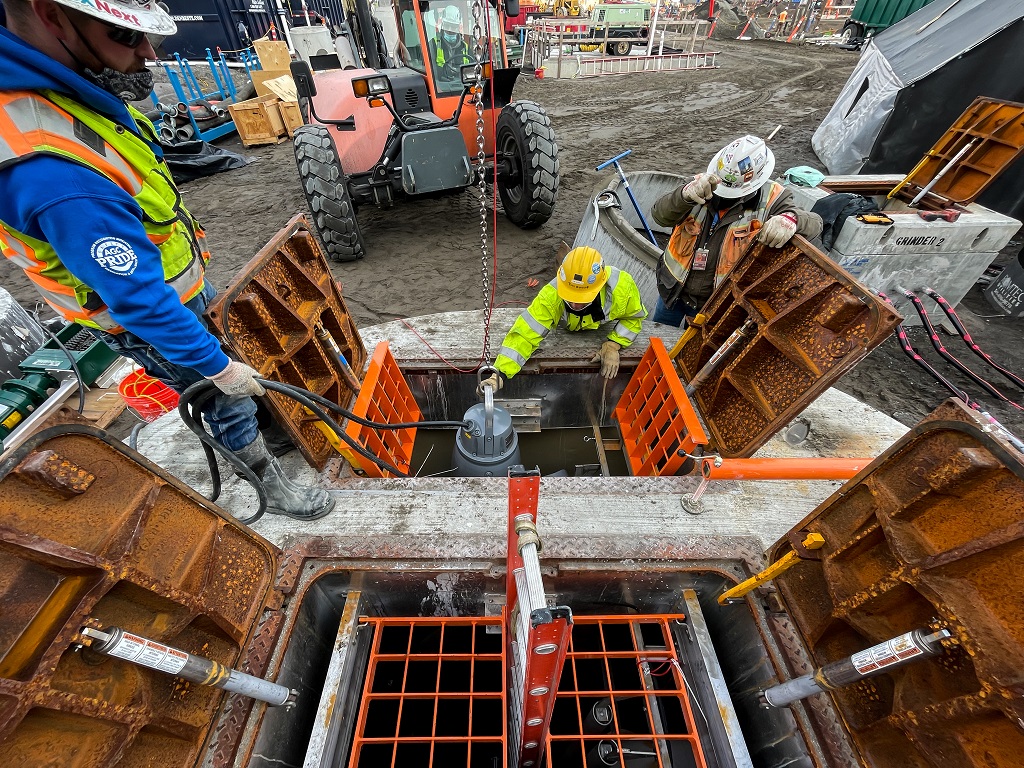
Image credit: romtecutilities.com
Should the entire station be destroyed and rebuilt? Not necessarily. The better question to consider is whether or not the existing infrastructure can accommodate pumps that meet current standards without compromising reliability or future capacity.
A thoughtfully designed retrofit to a pump station will help protect valuable infrastructure while replacing components which no longer meet the operating requirements.
Begin with the Structures No One Will Want to Replace
It is expensive and disruptive to repair the wet well because it is buried in the ground, connected to pipes and essential to collect wastewater.
Retaining the concrete structure may help in reducing excavation work and construction.
However, the deterioration of the access hatch may complicate the decision. Romtec Utilities identifies wet well hatch replacement as a common retrofit requirement. Instead of affixing a fresh hatch to a damaged concrete structure and replacing the entire top slab might be a better option. This will allow for greater access to the structure, and extend its use, without the need to replace the entire structure as well.
A More Powerful Pump Changes the Engineering
Let’s say a residential area has seen an increase in population since its first lift station was built. It’s possible that current pumps aren’t sufficient to handle the increasing flows of wastewater.
A change to the pumping station may involve higher-horsepower pumps, but equipment selection isn’t a part of the system in which it is located. To get more powerful pumps there is a possibility that you will need make adjustments to the discharge elbows or the piping. You may also need to replace electrical controls or valves.
Engineers must also consider the system’s hydraulic requirements including the head of flow and total dynamic head. If you add a larger pump without taking into account these requirements, it can cause problems in operation instead of resolving these. Making plans for future capacity in the initial design can make later expansion considerably easier.
Keep the water moving during construction
A wastewater pump station retrofit introduces a challenge that ordinary equipment replacement projects may not face: the station may need to remain operational throughout construction.
Contractors are still working, and wastewater continues to come in. According to the report the project, a temporary bypass pumping system may be required to ensure service is maintained as the equipment that is in use is removed or new components are added.
Romtec Utilities accepted this task in the Federal Law Enforcement Training Center, Brunswick, Georgia.
The project required replacing two old wastewater lifting stations, whilst keeping the operation of the facility. The project was able to accommodate existing station footprints as well in operational requirements, using local-specific engineering and packaged replacement systems. This case illustrates why it is crucial to look at the construction process before installing.
If replacement is the best option, replace it.
Not all stations are suitable to be renovated. If the sewer lift station is in need of a replacement due to a badly deteriorated well, structural limitations or significant changes in hydraulic needs, it may be better to replace instead of modify.
Before making a decision it is crucial to take into consideration the structural health of the building, its compatibility equipment, its accessibility to construction sites, service continuity as well as long-term requirements. Romtec Utilities begins retrofit and replacement projects by determining which components will remain and which need to be replaced.
The company also develops engineering solutions tailored to the site, as well as preliminary designs and budget estimates. Prefabricated components are also able to help with installation and can reduce on-site construction requirements.
The work isn’t done until the pumps begin to run.
Modern lift stations should be operated as a system in one. Before returning a lift facility to normal service, start-up testing, commissioning, as well as testing of equipment is required to ensure that the pumps, controls and equipment work in accordance with the specifications.
Manuals for maintenance and operation, as well as training for operators, are essential. Maintenance personnel should be knowledgeable with the latest equipment and operating procedures, in addition to the manuals before they assume responsibility for the station.
Retrofitting infrastructure effectively preserves its value, while solving the shortcomings that led to modernization.
Municipalities and property owners have to consider more than immediate repairs. The most successful plan is one that integrates the new equipment into existing structures, provides essential service during construction, and also prepares the pumping system for years of continual operation.